

If your depression isn’t getting better despite trying multiple antidepressants, you might be dealing with treatment-resistant depression (TRD). This condition affects millions worldwide and can feel overwhelming. But there are advanced options that may help when standard treatments fall short. Here’s a quick breakdown of what you can try:
- TMS Therapy: Uses magnetic pulses to stimulate brain areas tied to mood. Non-sedative and done in daily sessions over weeks.
- Spravato® (Esketamine): A nasal spray offering fast relief by targeting NMDA receptors. Requires monitoring after use.
- IM Ketamine Therapy: Quick-acting injections for severe symptoms, administered in a clinical setting.
Each treatment has its pros and cons, and the best choice depends on your symptoms, medical history, and goals. Personalized approaches, including genetic testing and detailed assessments, can help tailor these options to your needs.
If you’re struggling, consult a mental health professional to explore these therapies and take the next step toward relief.
Managing Treatment-Resistant Depression: A Roadmap to Recovery
Advanced Clinical Treatment Options
When traditional antidepressants and therapy don’t provide the relief you’re seeking, there are advanced clinical treatments designed to address treatment-resistant depression. These therapies take a different approach, using methods that target the condition in unique ways. For individuals facing persistent depression, these options can offer new hope.
At Bright Horizons Psychiatry, adults 18 and older have access to several advanced treatment options. Each therapy has its own benefits and is tailored based on your symptoms, medical history, and treatment goals. Below is a closer look at these treatments.
Transcranial Magnetic Stimulation (TMS)
TMS therapy uses magnetic pulses to stimulate areas of the brain that play a key role in mood regulation. This non-invasive treatment doesn’t require anesthesia or sedation, making it a convenient option for people who haven’t found success with traditional antidepressants.
During a session, a magnetic coil is placed against your forehead to deliver pulses targeting the underactive left prefrontal cortex. This stimulation helps restore normal brain activity, which can improve mood and reduce depressive symptoms.
TMS is typically done in daily sessions over several weeks, with each session lasting about 30 to 40 minutes. What’s great is that you can resume your regular activities immediately afterward, and it avoids many of the side effects associated with medications.
This therapy is FDA-approved for treating major depressive disorder and has been supported by numerous clinical studies. Side effects are usually mild, such as temporary scalp discomfort or headaches, and are limited to the treatment area.
Now, let’s discuss a therapy that works fast for those in urgent need.
Spravato® (Esketamine) Nasal Spray
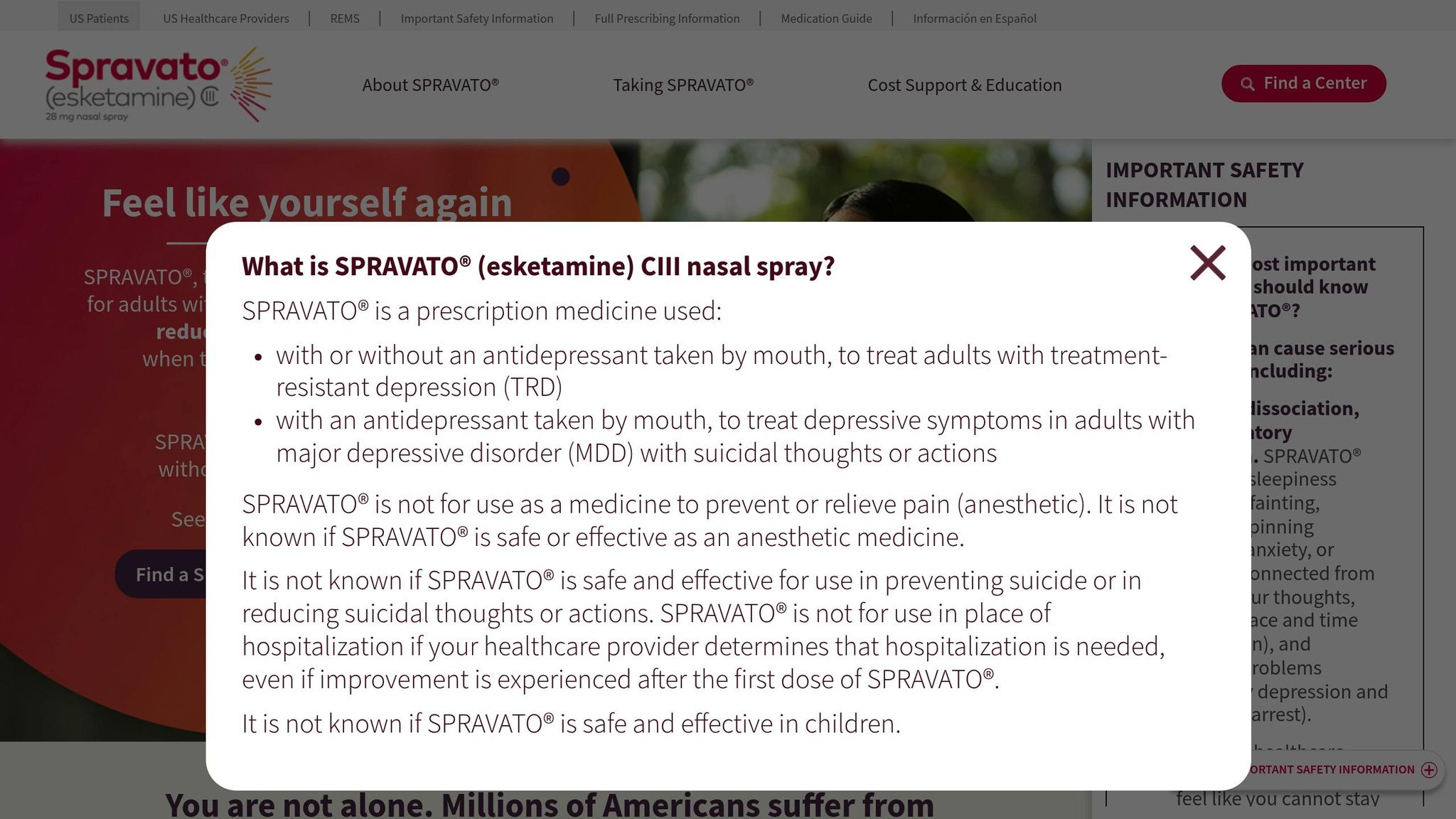
Spravato works differently from traditional antidepressants by targeting the brain’s NMDA receptors instead of serotonin pathways. This novel mechanism allows for rapid relief, often within hours or days, compared to the weeks it can take for standard medications to show results.
This fast-acting nasal spray is especially helpful for individuals with severe depression or those at risk of self-harm. After administration, patients are monitored for two hours to ensure safety, as side effects like dizziness, dissociation, or changes in blood pressure can occur.
The treatment starts with twice-weekly sessions during the first month. Over time, the frequency decreases to weekly or bi-weekly maintenance sessions. Spravato is used alongside an oral antidepressant, creating a comprehensive plan for managing treatment-resistant depression.
For another fast-acting option, consider injectable ketamine therapy.
IM Ketamine Therapy
Intramuscular ketamine injections provide another rapid solution for severe depression, particularly when other treatments have failed. Like Spravato, ketamine targets NMDA receptors but is delivered via injection, allowing for precise dosing tailored to your needs.
Treatment takes place in a controlled clinical setting where medical staff monitor your vital signs and overall response during and after the injection. This ensures your safety and helps achieve the best possible outcome.
The effects of IM ketamine are often felt within hours, offering quick relief for those in need. However, as with other ketamine-based treatments, side effects like mild dissociation, blood pressure changes, or temporary perception shifts may occur. These are carefully managed in the clinical environment.
Each of these therapies provides a different way to address treatment-resistant depression. The best choice depends on your medical history, symptom severity, lifestyle, and how you’ve responded to previous treatments. By working with experienced psychiatric professionals, you can find the approach that’s right for you.
Treatment Comparison: Benefits and Limitations
TMS, Spravato®, and IM Ketamine each bring unique advantages and challenges to the table when addressing treatment-resistant depression. Let’s break down how these options compare and what factors might guide your decision.
Side-by-Side Treatment Comparison
| Treatment | Speed of Relief | Session Length & Duration | Side Effects | Success Rate | Key Benefits | Limitations |
|---|---|---|---|---|---|---|
| TMS Therapy | 4–6 weeks | 30–40 minutes daily for 4–6 weeks | Mild scalp discomfort, temporary headaches | Up to 83% show improvement; 60% respond to standard protocols | Non-invasive, drug-free, allows immediate return to daily activities | Requires daily sessions and gradual improvement |
| Spravato® (Esketamine) | Hours to days | 2+ hours per session (including monitoring), twice weekly initially | Dizziness, dissociation, blood pressure changes | Individual outcomes vary | FDA-approved; rapid relief when used with an oral antidepressant | Requires monitoring during each session |
| IM Ketamine | Hours | Varies with monitoring time | Mild dissociation, blood pressure changes, perception shifts | Individual outcomes vary | Precise dosing, rapid relief | Off-label use; requires clinical supervision |
Safety and Effectiveness
TMS stands out for its safety profile. The risk of seizures is exceptionally low – less than 0.1%, or fewer than 3 cases per 100,000 sessions – and is lower than the risk associated with some antidepressants. Psychological side effects, such as mood swings, occur in fewer than 1% of cases.
Each treatment operates differently. TMS uses magnetic pulses to gradually restore normal brain activity, while Spravato® and IM Ketamine target NMDA receptors for faster symptom relief. Long-term results with TMS are encouraging, with over half of patients who respond maintaining remission six months after treatment.
Other Considerations
Cost and insurance coverage can differ significantly between treatments. TMS, FDA-approved since 2008 for major depression, recently gained approval for teens aged 15 and older in 2024, which may expand coverage options.
Ultimately, your choice will depend on factors like how quickly you need relief, how often you can attend sessions, and your individual circumstances. The next section delves into how care can be tailored to meet your specific needs.
sbb-itb-600bb85
Personalized Treatment Approaches
When it comes to treatment, one size definitely doesn’t fit all. A generic approach often falls short, especially for complex conditions. That’s where personalized strategies come in, using your unique biology, medical history, and life circumstances to craft a plan that works specifically for you. Below, we’ll explore how genetic testing, advanced technology, and in-depth assessments help shape these individualized treatment plans.
Genetic Testing for Medication Selection
Did you know your genes can influence how your body reacts to medication? Pharmacogenetic testing pinpoints specific gene variants – like CYP2D6 and CYP2C19 – that affect how antidepressants are metabolized. This insight helps doctors predict which medications are likely to work best for you and which ones might cause unwanted side effects.
For example, if you’re a "poor metabolizer", standard doses of certain medications might accumulate in your system, leading to toxic effects. On the other hand, "ultra-rapid metabolizers" may need higher doses to experience any benefit.
This type of testing is especially helpful if you’ve struggled with severe side effects or if multiple medications haven’t worked for you. Results are typically available within 1-2 weeks and can guide medication choices for years, making future treatment decisions more precise.
The good news? Many insurance plans now cover pharmacogenetic testing, especially if there’s a documented history of medication failures or adverse reactions. Once completed, the results become a permanent part of your medical record, giving future healthcare providers valuable insights for prescribing decisions.
Technology-Assisted Treatment Planning
Advances in technology have transformed psychiatric care, offering tools that make treatment more precise and adaptable. Data analytics, brain imaging, and digital monitoring are now part of the equation, helping clinicians tailor treatments to your specific needs.
Take brain imaging technologies like qEEG (quantitative electroencephalography), for example. These tools measure brainwave patterns, offering clues about whether treatments like TMS (transcranial magnetic stimulation) might be a good fit for you. This kind of objective data sharpens treatment planning.
Meanwhile, digital tools such as smartphone apps or wearable devices can track your symptoms, sleep patterns, and medication adherence in real time. This constant stream of data allows clinicians to fine-tune your treatment plan and intervene early if something isn’t working as expected.
Complete Psychiatric Assessment
Even with cutting-edge tools, nothing replaces a thorough psychiatric evaluation. A comprehensive assessment dives deep into your medical and family history, past medication responses, co-occurring conditions, and lifestyle factors to ensure no stone is left unturned.
For instance, conditions like anxiety disorders, ADHD, or bipolar disorder often occur alongside depression. These co-occurring conditions, if left undiagnosed, can interfere with treatment and explain why earlier attempts may not have worked.
A detailed review of your medication history can also uncover helpful patterns. Maybe you’ve responded better to a specific class of drugs, or perhaps the timing of doses has played a role in your treatment outcomes. This information helps avoid repeating past mistakes and guides future prescribing decisions.
Lifestyle factors are another critical piece of the puzzle. Sleep disorders, nutritional deficiencies, hormonal imbalances, or chronic medical conditions can all impact how effective psychiatric treatments are. Addressing these underlying issues can make a big difference in treatment success.
Finally, the assessment also considers psychosocial factors like your support system, work environment, and life stressors. These elements play a major role in recovery and help determine whether additional interventions – like therapy or social services – might be beneficial alongside medical treatments.
Lifestyle Changes That Support Treatment
Building Your Support Network
Having a solid support network can make a big difference in managing treatment-resistant depression. In fact, a 2015 survey found that people with support reported an average stress level of 5/10, compared to 6.3/10 for those without it. Here are some simple ways to start building those connections:
- Start small. A quick hello, a short phone call, or even a video chat can help rebuild or strengthen relationships over time.
- Join activities you enjoy. Whether it’s a club, volunteering, or a peer support group, these can help reduce feelings of isolation while offering helpful strategies for coping.
- Seek professional guidance. Your psychiatrist, therapist, or primary care provider can play a key role in coordinating your care and offering additional support.
Next Steps for Your Mental Health Journey
If traditional antidepressants haven’t worked for you, there are other options to consider. Advanced therapies like TMS (Transcranial Magnetic Stimulation), Spravato®, and IM Ketamine provide new possibilities for those dealing with treatment-resistant depression. The first step? Schedule a consultation to learn more about these treatments and see if they’re right for you.
Your initial consultation is designed to help you take that first step toward feeling better. At Bright Horizons Psychiatry, this visit is all about understanding your unique situation – your history, symptoms, and what you hope to achieve. You can choose to meet in person at 6000 Executive Blvd #101, Rockville, MD 20852, or opt for the convenience of a telehealth session.
"During your first visit, we’ll take the time to understand your story, symptoms, and goals. You’ll go through a complete assessment in a calm, supportive setting."
No referral is required, and scheduling is quick and easy. Call (301) 599-1001 or book online to get started within just a few days.
FAQs
What are the side effects and safety precautions for TMS, Spravato®, and IM Ketamine therapies?
TMS therapy is considered very safe, with most side effects being mild, such as scalp discomfort or headaches. Serious complications, like seizures, are extremely rare, occurring in fewer than 3 out of 100,000 sessions. This makes it a well-tolerated treatment for many people.
Esketamine (Spravato®) can sometimes cause dizziness, nausea, sedation, or dissociation during or shortly after treatment. More serious risks, such as temporary loss of consciousness or breathing difficulties, highlight the importance of close monitoring during administration to ensure patient safety.
IM Ketamine may result in dissociation, hallucinations, or elevated blood pressure. Although rare, serious side effects like respiratory depression or cardiovascular issues can occur, making medical supervision essential during treatment. It’s important to discuss these factors with your healthcare provider to decide which option is best suited for your needs.
How can genetic testing help in finding the right medication for treatment-resistant depression?
Genetic testing offers a fascinating way to understand how your body interacts with specific medications. By examining your genetic profile, it can pinpoint which treatments are more likely to be effective for you and which ones might lead to unwanted side effects. This approach takes much of the guesswork out of finding the right medication, especially for those dealing with treatment-resistant depression.
For anyone who hasn’t seen results with traditional treatments, genetic testing provides a science-backed method to guide medication decisions and potentially improve outcomes. It’s a move toward making mental health care more tailored to each individual’s needs.
What lifestyle changes can help boost the effectiveness of advanced depression treatments?
Making a few adjustments to your daily habits can greatly boost the impact of advanced treatments for depression. Adding stress-relief practices like mindfulness, meditation, or yoga to your routine can help ease your mind and promote emotional balance. Ensuring you get consistent, quality sleep by sticking to regular sleep and wake times is another key factor in supporting mental health.
Incorporating physical activity – whether it’s a brisk walk, a jog, or another form of exercise – can lift your mood by releasing endorphins and lowering stress levels. Spending time outside, diving into hobbies you enjoy, and maintaining a structured schedule for meals, sleep, and daily activities can also bring a sense of stability. These seemingly simple changes work hand-in-hand with advanced therapies, offering additional support on your path to better mental health.
