
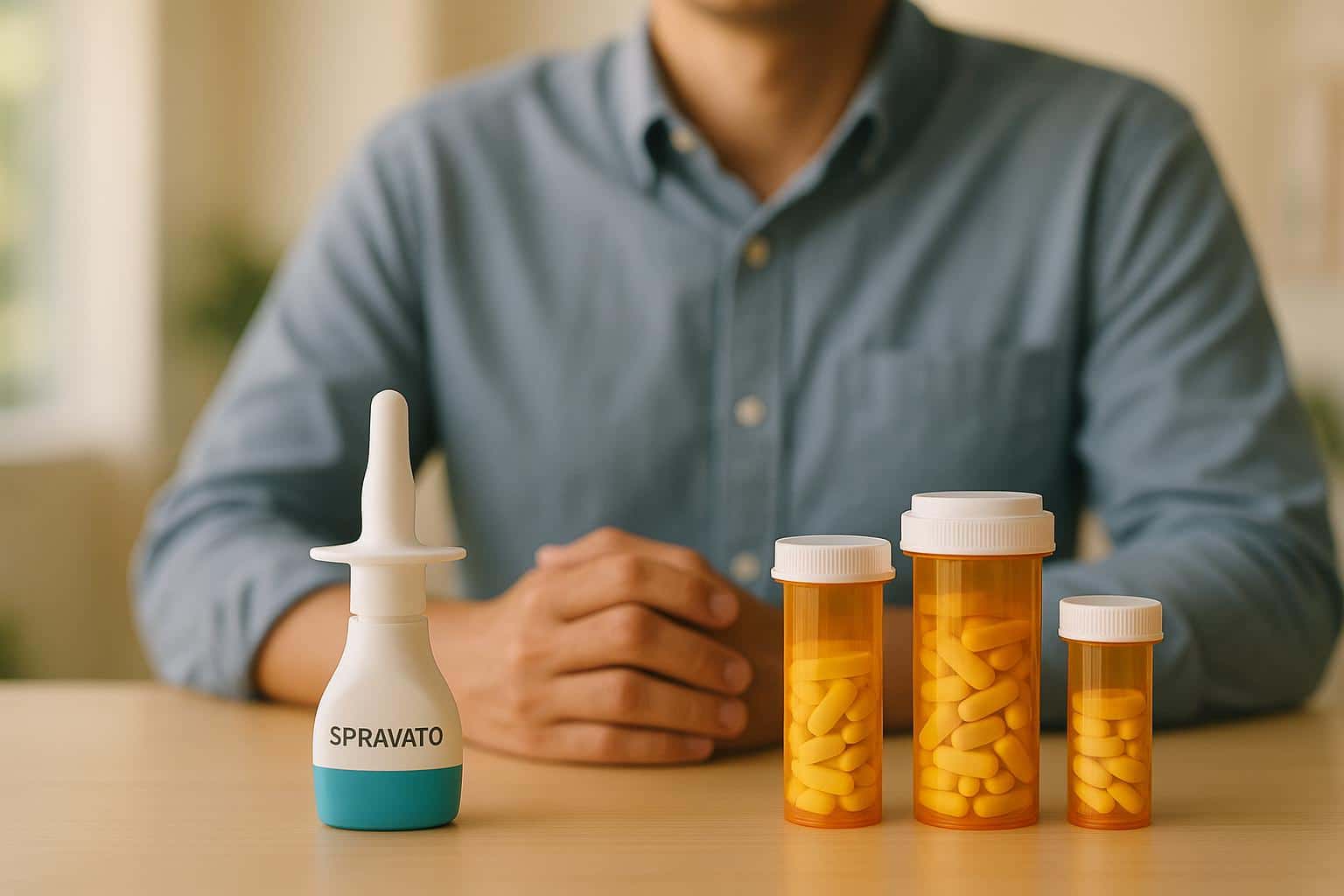

When it comes to depression treatment, Spravato (esketamine) and antidepressants like SSRIs or SNRIs differ in how they work, how fast they act, and how they’re administered. Spravato is designed for people with treatment-resistant depression (TRD) or suicidal thoughts, offering relief in hours to days. In contrast, antidepressants are used more broadly but take 4–6 weeks to show effects. Here’s a quick breakdown:
- Spravato: Targets the brain’s glutamate system; administered in clinics under supervision; fast-acting; higher cost; suitable for severe cases.
- Antidepressants: Focus on serotonin/norepinephrine; taken at home; gradual relief; cost-effective; first-line option for most.
Quick Comparison
Feature
Spravato (Esketamine)
Antidepressants (SSRIs/SNRIs)
Primary Use
Treatment-resistant cases
General depression treatment
Mechanism
Glutamate system (NMDA)
Serotonin/norepinephrine
Relief Timeline
Hours to days
4–6 weeks
Administration
Clinical setting, supervised
Home use
Cost
$4,720–$6,785/month (uninsured)
$4–$40/month (with insurance)
Side Effects
Dissociation, dizziness
Nausea, weight gain
Spravato offers a faster option for severe cases but requires more intensive monitoring and higher costs. Antidepressants remain the go-to for most, balancing effectiveness with convenience.
Spravato vs Antidepressants: Which is Better & Why?
How Spravato and Traditional Antidepressants Work
The key difference between Spravato and traditional antidepressants lies in the brain systems they target and how they influence brain function. Here’s a closer look at how each treatment operates.
Spravato (Esketamine)
Spravato takes a unique approach compared to conventional antidepressants. It works as a non-competitive antagonist of the NMDA receptor within the brain’s glutamate system. By blocking NMDA receptors on GABAergic interneurons, it increases glutamate release and enhances AMPA receptor activity.
Glutamate plays a crucial role in learning, memory, and mood regulation. Spravato modifies glutamate activity, sparking neuroplastic changes through increased synaptic protein synthesis, the formation of new synapses (synaptogenesis), and activation of BDNF and mTOR pathways. These processes support dendritic growth and improve synaptic communication, enabling the brain to “rewire” itself more effectively. This rapid neuroplastic response is what makes Spravato particularly effective for treatment-resistant depression, often providing relief within hours or days.
Traditional Antidepressants
Traditional antidepressants follow a different biochemical route. Medications like SSRIs and SNRIs primarily focus on monoamine neurotransmitters – serotonin, norepinephrine, and sometimes dopamine. They work by blocking the reuptake of these neurotransmitters, allowing them to remain in the synaptic gap longer. Over time, this helps rebalance neurotransmitter levels.
However, unlike Spravato, traditional antidepressants do not directly activate neurotrophic pathways involving BDNF and mTOR. This difference explains why their effects take longer to manifest, with noticeable improvements typically emerging after 4–6 weeks.
Comparison Table: How They Work
Feature
Spravato (Esketamine)
Traditional Antidepressants
Primary Target
NMDA receptors in the glutamate system
Monoamine neurotransmitters (serotonin, norepinephrine, dopamine)
Mechanism
Blocks NMDA receptors on GABAergic interneurons; boosts glutamate and AMPA activity
Inhibits the reuptake of serotonin, norepinephrine, and dopamine
Brain Changes
Promotes synaptic protein synthesis and new synapse formation, increasing neuroplasticity
Gradually rebalances neurotransmitter levels
Neurotrophic Factors
Directly stimulates BDNF and mTOR production
Does not directly stimulate BDNF and mTOR
Speed of Action
Effects seen within hours to days
Therapeutic response takes 4–6 weeks
The contrasting mechanisms highlight why Spravato acts faster than traditional antidepressants, offering a quicker path to relief for patients with treatment-resistant depression.
Effectiveness for Treatment-Resistant Depression
The effectiveness of treatments for depression can vary significantly, especially in cases where traditional options fail. This is where the differences between Spravato and conventional antidepressants become crucial.
Spravato: Designed for Treatment-Resistant Depression
Spravato is FDA-approved specifically for adults with treatment-resistant depression – those who haven’t seen sufficient improvement after trying at least two antidepressants. This approval highlights its role as a more specialized treatment rather than a first-line option.
What sets Spravato apart is how it works. Unlike traditional antidepressants, it targets a different neurotransmitter pathway, offering new hope for patients who haven’t responded to standard treatments. Studies show that when combined with an oral antidepressant, Spravato can lead to significant symptom improvement. However, it’s only prescribed after other treatments have failed, reinforcing its role as a second-line option.
In contrast, traditional antidepressants generally take longer to show results, which can be frustrating for those with severe or resistant depression.
Traditional Antidepressants: Challenges in Severe Cases
Traditional antidepressants are often the go-to treatment for major depressive disorder, and they work well for many people. But when it comes to treatment resistance, their effectiveness tends to drop with each additional trial. This can lead to what’s often called “medication fatigue,” where patients feel discouraged by repeated failures.
Another challenge is the slow onset of symptom relief, which can be particularly hard for individuals dealing with severe depression. For these patients, timely adjustments and close monitoring during the initial stages of treatment are crucial.
Comparison Table: Effectiveness and Usage
Feature
Spravato (Esketamine)
Traditional Antidepressants
Primary Use
For treatment-resistant depression after 2+ failed trials
First- and second-line treatment for major depressive disorder
Eligibility
Adults unresponsive to at least two antidepressants
Most adults with major depressive disorder
Response Rate
Significant improvements in resistant cases
Varies depending on the individual
Effectiveness After Multiple Failures
Maintains effectiveness due to its unique mechanism
Effectiveness diminishes with additional trials
Combination Requirement
Used with an oral antidepressant
Can be used alone or with other treatments
Treatment Setting
Administered in specialized clinics under supervision
Usually self-administered at home
While traditional antidepressants remain the first choice for treating depression, Spravato provides a valuable alternative for those who haven’t found relief through standard options. The decision between these treatments depends on the patient’s history, specific needs, and how quickly symptom relief is required.
How Fast Do Results Appear?
The timeline for symptom relief is a key difference between Spravato and traditional antidepressants. For individuals dealing with severe depression, the speed of improvement can play a critical role in their recovery.
Spravato: Quick Relief for Severe Depression
Spravato works fast. By targeting NMDA receptors, it promotes neural repair and helps patients feel relief within hours or days of their first treatment.
“Spravato, however, has a much quicker onset of action. Many people start to notice improvements within just a few hours or days of their first treatment”, says Dr. Vinay Saranga from the North Carolina Institute of Advanced NeuroHealth.
Clinical research backs this up. Adults with treatment-resistant depression reported relief within 24 hours, outperforming placebo results. For those with major depressive disorder and suicidal ideation, the effects were even faster – significant improvements were observed within just four hours of treatment.
Some patients describe feeling lighter, clearer, or more at ease after their first dose. This makes Spravato particularly helpful for those experiencing severe depressive episodes or acute suicidal thoughts, offering relief while other treatments take longer to work.
In contrast, traditional antidepressants operate on a slower timeline.
Traditional Antidepressants: A Gradual Path to Improvement
Conventional antidepressants often take 4–6 weeks to produce noticeable results. These medications work by slowly adjusting neurotransmitter levels, such as serotonin and norepinephrine, which takes time to impact mood and behavior.
This delay can be frustrating for patients with severe depression, especially if their daily functioning is already compromised. During this waiting period, consistent monitoring and emotional support are crucial to help patients stay motivated and hopeful as they await the medication’s effects.
Comparison Table: Relief Timelines
Timeline Factor
Spravato (Esketamine)
Traditional Antidepressants
Initial Relief
Hours to days after first dose
4–6 weeks of regular use
Peak Effectiveness
Builds over several sessions
Full effect after 6–8 weeks
Mechanism Speed
Rapid modulation of glutamate
Gradual neurotransmitter balance
Crisis Suitability
Yes, approved for suicidal ideation
Not approved for acute suicidal risk
Patient Experience
Noticeable mood shifts within 24–72 hours
Steady improvement over weeks
Treatment Continuity
Effects increase with each session
Requires daily, consistent dosing
According to Johnson & Johnson’s data, 35.6% of patients achieved remission after the initial phase (twice-weekly doses for four weeks), and 46.1% remained in remission during the maintenance phase. Spravato’s rapid results have earned it approval not just for treatment-resistant depression but also as a standalone option, offering improvements as early as 24 hours without the need for daily oral antidepressants.
Choosing between these treatments often depends on how quickly relief is needed. While traditional antidepressants are effective for many, Spravato’s fast-acting nature provides a critical lifeline for those who cannot afford to wait weeks for improvement.
How Treatments Are Given and Monitored
The way Spravato is administered sets it apart from traditional antidepressants, shaping distinct treatment experiences for patients. These differences influence everything from scheduling to safety protocols, making it essential to understand how each treatment is delivered and monitored.
Spravato: Supervised Administration in a Clinical Setting
Spravato is a nasal spray approved by the FDA, but it’s not something you can take home. Instead, it must be self-administered under the watchful eye of a healthcare provider at a certified treatment center . This strict protocol ensures patient safety and allows for immediate medical attention if needed.
Before each session, patients are required to fast – avoiding food for at least 2 hours and liquids for 30 minutes. A healthcare provider will also check blood pressure and confirm the timely use of any required nasal medications beforehand.
After taking a dose, patients must stay at the treatment center for a minimum of 2 hours. During this time, medical staff monitor for potential side effects, including sedation, dissociation, and blood pressure spikes. Blood pressure typically peaks about 40 minutes after the dose and can remain elevated for up to 4 hours .
The initial treatment schedule involves two sessions per week for the first month, followed by weekly sessions in the second month. After that, the frequency is adjusted based on how the patient responds. Each session lasts around 1.5 to 2 hours, including the administration and the mandatory observation period, all under the FDA-required REMS (Risk Evaluation and Mitigation Strategy) program .
Due to the potential for side effects, patients must arrange for transportation home and are advised to avoid driving or operating machinery until the next day, after a full night’s sleep.
Traditional Antidepressants: Home-Based Convenience
Traditional antidepressants are much simpler to manage. These medications are taken orally at home, eliminating the need for clinical visits tied specifically to administration.
Most patients take their prescribed dose once or twice a day, often with meals to reduce the risk of stomach upset. This self-managed approach is convenient and doesn’t require structured monitoring. However, consistent daily dosing is critical to maintain the drug’s effectiveness. Skipping doses or stopping abruptly could lead to withdrawal symptoms or a relapse in symptoms.
While regular follow-up appointments with healthcare providers are still necessary, these are typically spaced weeks or even months apart. These check-ins help monitor progress and adjust dosages as needed.
Comparison Table: Administration Methods
Administration Factor
Spravato (Esketamine)
Traditional Antidepressants
Location
Certified treatment center only
Home administration
Supervision
Direct observation by healthcare provider
Self-administered
Frequency
Twice weekly initially, then weekly or bi-weekly
Daily dosing
Session Duration
1.5–2 hours per visit
Requires only seconds
Post-Dose Monitoring
2-hour observation required
None
Transportation
Must arrange a ride home
No restrictions
Pre-Treatment Requirements
No food for 2 hours; no drinks for 30 minutes
Often taken with food
FDA Restrictions
Administered under the REMS program
Standard prescription dispensing
Work/Life Impact
Significant time commitment
Minimal disruption to daily routine
The differences in these administration methods highlight the tailored safety measures and monitoring needs of each treatment. Spravato’s clinical setting provides immediate support for any complications, while traditional antidepressants offer the convenience of home use, making them better suited for long-term management. Understanding these distinctions can help patients and providers make informed decisions about which treatment aligns best with their needs and lifestyle.
Side Effects and Safety
When choosing a treatment, understanding side effects and safety is just as important as knowing about its effectiveness and how it’s administered. For anyone considering Spravato or traditional antidepressants, being aware of their side effects and monitoring needs is essential. Each treatment comes with unique safety concerns, requiring tailored approaches to ensure proper care.
Spravato: Side Effects and Monitoring Needs
Spravato, due to its specific mechanism of action, is associated with side effects that usually appear during or shortly after its administration. The most common issues include dizziness, nausea, sedation, and dissociation – a temporary feeling of being disconnected from thoughts or surroundings. While dissociation is a frequent side effect, it typically resolves within a few hours.
Another key safety consideration is the potential for temporary spikes in blood pressure during treatment. To address this, healthcare providers closely monitor patients during and immediately after sessions. Other reported side effects include vertigo, numbness or reduced sensation, anxiety, lethargy, and vomiting. Since Spravato is related to ketamine, it is classified as a controlled substance, which adds another layer of oversight.
Patients undergoing Spravato treatment are advised not to drive until they feel fully alert.
Traditional Antidepressants: Short and Long-Term Side Effects
Traditional antidepressants come with a different set of risks. Early side effects often include nausea, headaches, dry mouth, constipation, and either drowsiness or insomnia. Over time, some patients may experience sexual side effects or weight gain.
Stopping these medications abruptly can lead to withdrawal symptoms, such as flu-like feelings, dizziness, and mood swings. Additionally, many antidepressants carry FDA warnings about a heightened risk of suicidal thoughts, especially in younger patients during the early stages of treatment. In rare cases, combining these drugs with other serotonergic medications can lead to serotonin syndrome, a potentially serious condition.
Comparison Table: Side Effects and Safety
Safety Factor
Spravato (Esketamine)
Traditional Antidepressants
Most Common Side Effects
Dizziness, dissociation, nausea, sedation
Nausea, headache, dry mouth, sexual side effects
Onset of Side Effects
During or shortly after treatment
Gradual, over time
Duration of Acute Effects
Short-lived, resolves within hours
Persist as long as treatment continues
Blood Pressure Impact
Temporary increases observed
Minimal impact
Dissociation Risk
Common
Rare
Sexual Side Effects
Uncommon
Relatively common
Weight Gain Risk
Low
Possible with some medications
Abuse Potential
Moderate (controlled substance)
Low
Withdrawal Concerns
Minimal due to intermittent dosing
Discontinuation symptoms possible
Driving Restrictions
Avoid driving until fully alert
No specific restrictions
Monitoring Requirements
Intensive during treatment sessions
Periodic follow-up visits
Black Box Warnings
None reported
FDA warnings for suicidal thoughts in young patients
Emergency Risks
Blood pressure spikes, dissociation
Rare serotonin syndrome, potential overdose
The safety considerations for these treatments highlight their unique mechanisms and how they’re administered. Spravato demands close, in-the-moment supervision due to its immediate effects, while traditional antidepressants require ongoing management to address longer-term risks. By understanding these differences, patients and healthcare providers can make informed decisions tailored to individual needs.
Choosing the Right Treatment
Deciding between Spravato and traditional antidepressants depends on your personal medical history and how you’ve responded to past treatments. Knowing the circumstances where each option might be suitable can help you have a productive discussion with your healthcare provider.
When Spravato Might Be Recommended
Spravato is specifically approved for adults (18 and older) dealing with Treatment-Resistant Depression – a condition diagnosed when at least two different oral antidepressant trials have failed to provide relief. It can also be considered for individuals with Major Depressive Disorder (MDD) who are experiencing acute suicidal thoughts or behaviors. One of Spravato’s key benefits is its rapid onset, often providing relief within hours or days, compared to the weeks traditional antidepressants typically require.
However, Spravato is not suitable for everyone. It’s not approved for individuals under 18, and it’s generally avoided during pregnancy or breastfeeding due to potential risks to the baby. Those with severe liver impairment should also exercise caution, as the effects of Spravato in this group haven’t been fully studied.
Factors to Consider: Costs, Eligibility, and Treatment Settings
The cost of treatment is a major consideration. Traditional antidepressants are relatively affordable, typically ranging from $4 to $40 per month with insurance. On the other hand, Spravato is significantly more expensive, costing $4,720 to $6,785 per month without insurance coverage. Fortunately, many patients can access Spravato for as little as $10 per treatment through insurance and manufacturer assistance programs.
Insurance approval for Spravato requires specific documentation. You’ll need a confirmed diagnosis of Treatment-Resistant Depression, showing that at least two (and sometimes three) oral antidepressants have been ineffective. Your healthcare provider will also need to secure prior authorization from your insurance company, verifying that traditional treatments haven’t worked for your condition.
Another key difference is where and how these treatments are administered. Traditional antidepressants are taken at home, while Spravato must be administered in a certified healthcare facility. After each session, you’ll be monitored for at least two hours to ensure safety, which can add time for travel and work adjustments. These logistical factors highlight the need for specialized care, such as what is offered at Bright Horizons Psychiatry.
Bright Horizons Psychiatry: Specialized Care for Treatment-Resistant Depression
Located in Rockville, MD, Bright Horizons Psychiatry – led by Dr. Amir Etesam – focuses on helping adults who haven’t responded to traditional depression treatments. Their services include Spravato® nasal spray, IM Ketamine injections, and TMS therapy.
The clinic is dedicated to creating personalized treatment plans tailored to each patient’s individual needs. They serve adults 18 and older, ensuring that those interested in advanced treatments like Spravato meet the necessary eligibility requirements. To make care more accessible, Bright Horizons Psychiatry also offers telehealth consultations, simplifying the process of initial evaluations and follow-ups.
For patients who qualify for Spravato, the clinic provides the required supervised setting for safe administration and ongoing monitoring. Beyond Spravato, Bright Horizons Psychiatry continues to offer traditional medication management and other proven treatments, giving patients access to a comprehensive range of options for managing depression.
Conclusion: Main Differences Between Spravato and Traditional Antidepressants
Spravato works by targeting the brain’s glutamate system, while traditional antidepressants focus on increasing monoamine levels. By blocking NMDA receptors, Spravato promotes neuroplasticity and boosts brain-derived neurotrophic factor (BDNF) production, often providing relief within hours or days. This rapid action is a sharp contrast to the 4–6 weeks it typically takes for traditional antidepressants to take effect as they work to balance neurotransmitters.
“Spravato interacts with the brain’s glutamate system, which is a newer area of focus for depression treatment.” – Brittany Huckaby, psychiatric nurse practitioner
The way these treatments are administered also sets them apart. Traditional antidepressants are usually taken at home, requiring only occasional follow-ups. In contrast, Spravato must be administered under supervision in certified healthcare facilities, with patients observed for a set period afterward.
Choosing between these treatments depends on factors like individual needs, treatment history, and the severity of depression symptoms. For those who haven’t responded to standard treatments, specialized care can provide access to advanced options like Spravato, alongside support for traditional medication management.
Knowing these distinctions helps patients and healthcare providers make informed decisions about the best approach for treating depression.
FAQs
How is Spravato different from traditional antidepressants for treating treatment-resistant depression?
Spravato (Esketamine) introduces a fresh approach to addressing treatment-resistant depression by focusing on the NMDA receptor in the brain. This receptor plays a crucial role in mood regulation and neuroplasticity, setting Spravato apart from traditional antidepressants that mainly target serotonin, norepinephrine, or dopamine.
One standout benefit of Spravato is its quick symptom relief, often becoming noticeable within just 24 to 48 hours. This is a significant contrast to the weeks it typically takes for standard antidepressants to take effect. For individuals who haven’t found success with conventional treatments, Spravato offers a promising alternative for managing severe depression when other options have fallen short.
What makes the administration of Spravato different from traditional antidepressants, and what should patients expect during treatment?
Spravato (Esketamine) is a nasal spray administered in a healthcare setting under medical supervision, setting it apart from traditional antidepressants, which are typically taken as daily oral pills at home. It’s commonly used alongside these standard medications to address treatment-resistant depression.
With Spravato, treatment involves visiting a clinic, where patients receive the nasal spray and are monitored for side effects for about two hours after each session. The process starts with multiple sessions per week and may gradually decrease over time. On the other hand, traditional antidepressants require consistent daily use at home, with their effects building up gradually over several weeks.
For those considering Spravato, it’s important to understand that it involves a more structured approach, including regular clinic visits and close supervision. In contrast, traditional antidepressants provide greater independence but may take longer to deliver noticeable results.
What should I know about the cost and insurance coverage for Spravato treatment?
The cost of Spravato treatment can differ greatly based on your insurance coverage. Many insurance plans require patients to have tried 2 to 4 traditional antidepressants unsuccessfully before approving coverage for Spravato. If you have insurance, your out-of-pocket expenses could be as low as $10 per treatment, especially when assistance programs are available. Without insurance, however, the monthly cost generally falls between $4,700 and $6,800, depending on how often you receive treatment.
For those with Medicare, Medicare Part B typically covers 80% of the treatment cost. This includes the medication itself, which is priced at around $590 per session. To get a clear understanding of your costs, it’s essential to confirm the details of your coverage directly with your insurance provider.