
Anxiety treatment for adults in Rockville and Frederick
Evidence-based anxiety care for adults across Montgomery County — medication management, Deep TMS when appropriate, and coordinated CBT referrals, delivered by psychiatrists who take anxiety seriously.
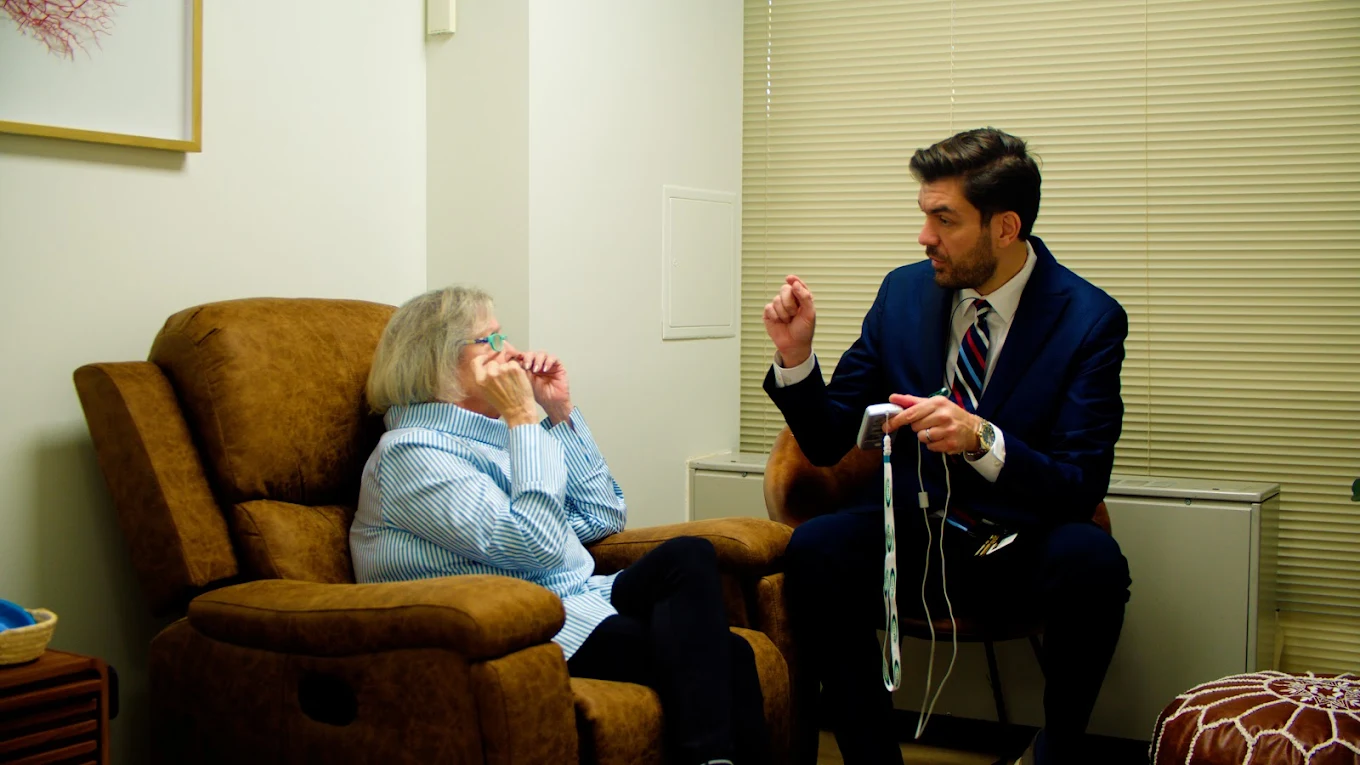
- Psychiatric evaluation for anxiety disorders
- Careful medication management
- Major insurance accepted
- Follow-ups available by telehealth
Symptoms
Anxiety is one of the most treatable conditions in psychiatry. It often shows up as chronic worry, panic, avoidance, or health fears — not just “feeling stressed.”
-
Generalized anxiety
- Persistent worry that is hard to turn off
- Muscle tension, restlessness, or feeling on edge
- Trouble concentrating because the mind will not settle
- Sleep that is light, delayed, or broken by rumination
-
Panic and physical symptoms
- Sudden surges of fear with racing heart or shortness of breath
- Fear of the next attack shaping where you go and what you avoid
- Chest tightness, dizziness, or feeling detached during episodes
- Emergency-room visits that keep coming back normal
-
Social and health anxiety
- Avoiding meetings, calls, or social situations that feel exposing
- Replaying conversations and scanning for judgment
- Catastrophic health worries that do not settle with reassurance
- Body checking, symptom googling, or repeated medical visits
What the process looks like
Anxiety treatment is not a straight line. We take the time to get the diagnosis right, then adjust as your response, side effects, and life demands change.
-
Initial consultation
Book online or by phone. Intake paperwork is sent ahead of time so your first appointment is clinical work, not forms.
-
Comprehensive evaluation
A 60 to 90 minute in-person appointment at Rockville or Frederick covering your history, symptoms, previous treatments, and goals.
-
Clear options, clear plan
We walk through medication options, therapy referrals, timelines, and trade-offs. You are a participant in the decision, not a passenger.
-
Follow-up and adjustment
Most patients are seen every two to four weeks early on, then less often as stability settles. Established patients can do many follow-ups by telehealth in Maryland.
Treatment options
Effective anxiety care is not one-size-fits-all. We match the plan to your symptoms, medical history, and what has already been tried — with conservative prescribing as the default.
-
Medication management
SSRIs, SNRIs, and other options chosen for your presentation — started carefully, monitored closely, and adjusted until the benefit is real.
-
Coordinated CBT referrals
Most anxiety patients benefit from cognitive behavioral therapy alongside medication. We coordinate with trusted Montgomery County specialists.
-
Deep TMS when appropriate
For treatment-resistant anxiety or anxious depression after first-line options have been exhausted, Deep TMS may be part of the plan.
-
Care for co-occurring conditions
When anxiety sits next to depression, ADHD, or treatment resistance, we treat the whole picture instead of chasing one symptom at a time.
Conditions that commonly occur with anxiety
Anxiety rarely shows up alone in adults. We look for what else is in the picture so treatment does not miss half the problem.
-
Depression
Anxious depression is common. Treating only one half often leaves the other half running the show.
-
ADHD
Untreated ADHD can feed constant overwhelm that looks like anxiety. Getting both diagnoses right changes the medication plan.
-
OCD
Intrusive thoughts and rituals can overlap with worry. The treatment approach differs once OCD is clearly identified.
-
Sleep problems
Rumination, hyperarousal, and delayed sleep make anxiety worse the next day — and they often need their own attention in the plan.
What makes anxiety care different here
We would rather give you the full picture than a sales pitch — benefits, limitations, and a plan that fits how you actually live.
-
Same psychiatrist every visit
A boutique practice, not a high-volume clinic. Appointments are long enough to talk through what is actually happening.
-
Built for complex cases
Anxiety complicated by depression, ADHD, treatment resistance, or failed medication trials is exactly the work we are built for.
-
Conservative prescribing
We start with the smallest effective dose and the fewest medications needed. Benzodiazepines are prescribed cautiously, not as a default.
-
Therapy coordination
We do not offer CBT in-house. We coordinate closely with Montgomery County specialists whose practice is built around anxiety therapy.
What untreated anxiety often pulls in
Leaving anxiety untreated does not only leave worry in place. It often narrows life and invites other conditions into the mix.
- Avoidance that shrinks work, travel, and social life over time
- Panic that trains the body to fear normal physical sensations
- Depression that grows from chronic fear, exhaustion, and self-criticism
- Sleep disruption that keeps anxiety and irritability elevated the next day
- Relationship strain when worry, irritability, or reassurance-seeking never lets up
- Years spent waiting when anxiety is one of the most treatable conditions in psychiatry
Insurance and anxiety visits
Psychiatric evaluation and medication management for anxiety are billed as standard outpatient psychiatry under the plans we accept, including Medicare, Maryland Medicaid, and major commercial carriers. Your responsibility is whatever your plan sets for a specialist visit.
Deep TMS coverage varies by insurance and diagnosis. We verify benefits before the first appointment so there are no surprises.
Anxiety questions we get asked
Does Bright Horizons treat anxiety?
Yes. We provide psychiatric evaluation, medication management, and Deep TMS for adults with anxiety disorders, and we coordinate with external therapists for CBT.
Does insurance cover anxiety treatment?
Medication management and psychiatric evaluation are generally covered by most insurance plans. Deep TMS coverage varies by insurance and diagnosis. We verify coverage before beginning treatment.
Does Bright Horizons offer therapy for anxiety?
Not in-house. We coordinate with trusted CBT specialists in the Montgomery County area and work closely alongside them.
What is treatment-resistant anxiety?
Anxiety that has not responded adequately to multiple first-line medication trials and therapy. Options include medication reevaluation, augmentation, Deep TMS, and investigation of underlying conditions that can masquerade as treatment resistance.
Does TMS help with anxiety?
Evidence is strongest for anxious depression. For treatment-resistant generalized anxiety, Deep TMS may be reasonable after first-line treatments have been exhausted.
How quickly can I be seen?
We typically schedule new patient evaluations within one to two weeks, with faster access for urgent presentations.
Can my first anxiety appointment be virtual?
No. Initial evaluations happen in person at Rockville or Frederick. Once you are an established patient, many follow-ups can be by video anywhere in Maryland.
Do you treat bipolar anxiety?
We treat Bipolar II and bipolar depression. We do not treat Bipolar I.
Is my information kept confidential?
Yes. Your psychiatric records are protected under HIPAA. We share information only with your consent or when the law requires it, such as situations involving imminent safety risk.