
Adult ADHD Psychiatrist and Treatment in Rockville and Frederick
Evaluation, diagnosis, and medication management for adult ADHD — including people who were never assessed as children, and people already on a stimulant that is not doing enough.
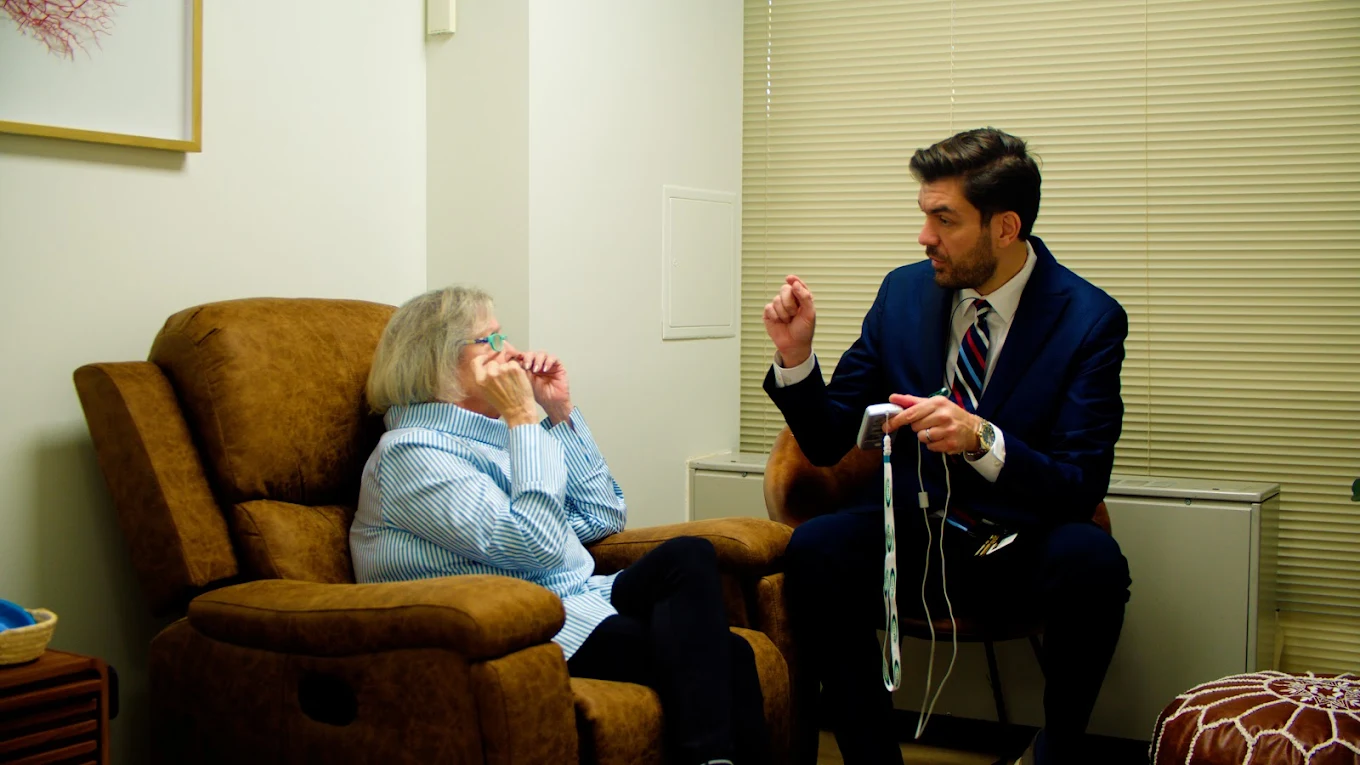
- Adult ADHD evaluation and diagnosis
- Stimulant and non-stimulant options
- Major insurance accepted
- Follow-ups available by telehealth
Symptoms
Adult ADHD rarely looks like a child bouncing in a chair. It often shows up as missed deadlines, unfinished projects, and a brain that will not hold still when you need it to.
-
Inattention
- Trouble starting or finishing tasks
- Losing focus in meetings or conversations
- Misplacing keys, phones, or paperwork
- Feeling mentally overloaded by simple planning
-
Hyperactivity and impulsivity
- Restlessness that looks like fidgeting or pacing
- Talking over people or interrupting without meaning to
- Acting before thinking through consequences
- Feeling driven and unable to slow down
-
Executive function and mood
- Time blindness and chronic lateness
- Emotional reactivity that surprises you afterward
- Burnout from compensating harder than everyone else
- Working memory that drops mid-task
How we evaluate
A diagnosis is only useful if it fits your day-to-day life. We take the time to get that right before writing a prescription.
-
Full history, in person
We cover childhood patterns, school and work history, prior diagnoses, and every medication you have tried. First evaluations happen at Rockville or Frederick — not by video.
-
Rule in and rule out
Anxiety, depression, sleep problems, and trauma can look like ADHD. We sort what is ADHD from what is sitting next to it before anyone talks about a stimulant.
-
Clear findings
You leave with a working diagnosis, what still needs clarifying, and whether medication, therapy referrals, or both make sense next.
-
Documentation when needed
When clinical documentation for school or workplace accommodations is appropriate, we include it as part of a proper evaluation — not as a shortcut around one.
Treatment options
Effective ADHD care is not one-size-fits-all. We match the plan to your symptoms, medical history, and what has already been tried.
-
Medication management
Stimulant and non-stimulant options, monitored and adjusted until the dose holds through a real workday — not just a partial improvement.
-
Dose optimization
Already on a medication that is only half working? We review timing, formulation, and dose rather than assuming ADHD medication does not work for you.
-
Therapy and coaching referrals
CBT, ADHD coaching, and ADHD-informed couples therapy when medication alone will not cover executive function or relationship strain.
-
Care for co-occurring conditions
When ADHD sits next to anxiety or depression, we treat the whole picture instead of chasing one symptom at a time.
We see patients at our Rockville office and our Frederick office. An adult ADHD evaluation and ongoing treatment are available at both offices. Wondering whether it is ADHD at all? Our adult ADHD screening questions walk through what an evaluation looks at.
Conditions that commonly occur with ADHD
ADHD rarely shows up alone in adults. We look for what else is in the picture so treatment does not miss half the problem.
-
Anxiety disorders
Worry, panic, and social anxiety often travel with adult ADHD — and untreated ADHD can keep feeding the anxiety loop.
-
Depression
Years of underperformance and self-blame can look like depression. Sometimes both are present and both need attention.
-
OCD
Intrusive thoughts and rigid routines can overlap with ADHD symptoms. Getting the diagnosis right changes the treatment plan.
-
Sleep problems
Delayed sleep, restless nights, and inconsistent schedules are common — and they make focus and mood worse the next day.
Why seek adult ADHD treatment
Treatment is not about becoming a different person. It is about reducing the friction that keeps getting in the way of the life you are already trying to live.
-
Work that costs too much
You may be keeping up — but only by working nights, missing details, or burning through every ounce of willpower before noon.
-
Relationships under strain
Forgotten plans, unfinished conversations, and emotional spikes are exhausting for you and for the people closest to you.
-
A childhood story that never got named
Many adults were bright enough to compensate in school. The scaffolding collapses in college, a first job, or parenthood.
-
Medication that never quite landed
If you already tried a stimulant and got partial results, that is a reason for a careful review — not a reason to stop looking.
Conditions that frequently occur with untreated ADHD
Leaving adult ADHD untreated does not only leave focus problems in place. It often pulls other conditions into the mix over time.
- Persistent underperformance at work or school despite effort
- Anxiety that keeps rising as deadlines and responsibilities pile up
- Depressive symptoms tied to chronic frustration and self-criticism
- Relationship conflict around forgetfulness, lateness, or emotional reactivity
- Sleep disruption and irregular routines that worsen focus and mood
- Higher risk of burnout, job changes, and unfinished long-term goals
Insurance and ADHD visits
ADHD evaluations and follow-up medication visits are billed as standard outpatient psychiatry under the plans we accept, including Medicare, Maryland Medicaid, and major commercial carriers. Your responsibility is whatever your plan sets for a specialist visit.
We verify benefits before the first appointment so there are no surprises. Controlled substances, when prescribed, follow Maryland and federal requirements.
ADHD questions we get asked
Are non-medication treatments available?
Yes. Medication is often central for adult ADHD, but it is not the only tool. We coordinate referrals for CBT, ADHD coaching, and ADHD-informed couples therapy when those would help with habits, organization, or relationship strain.
Can ADHD treatment help with work or relationship problems?
Often, yes. Better focus, follow-through, and emotional regulation can reduce conflict at work and at home. Treatment does not fix every relationship or job issue on its own, but it removes a major source of friction for many adults.
What is involved in your adult ADHD treatment?
A full in-person evaluation, a clear working diagnosis, and a plan that may include stimulant or non-stimulant medication, dose optimization, and referrals for therapy or coaching. Follow-ups monitor response, side effects, and whether the plan still fits.
How is adult ADHD diagnosed?
Through a detailed clinical evaluation covering current symptoms, childhood history, work and school patterns, prior treatments, and conditions that can look like ADHD. We do not diagnose from a short checklist alone.
Can adults develop ADHD later in life?
ADHD begins in childhood, but many adults are not diagnosed until later — especially if they compensated well in school. What often changes in adulthood is that life demands outgrow the coping strategies that used to hide the symptoms.
What are the benefits of medication for adult ADHD?
When the medication and dose are right, many adults notice clearer focus, better task initiation, less mental noise, and more stable follow-through across the day. Benefits depend on finding the right option and monitoring it carefully.
Is telehealth available for adult ADHD treatment?
Initial evaluations happen in person at Rockville or Frederick. Once you are an established patient, many follow-ups can be done by telehealth anywhere in Maryland, subject to clinical and prescribing requirements.
How long does ADHD treatment take to show results?
Stimulants can show effects quickly once the dose is in range. Non-stimulants and dose fine-tuning often take longer. Early follow-ups help us tell the difference between the wrong medication and the right medication at the wrong dose.
Will my treatment plan change over time?
It can. Work demands, sleep, co-occurring anxiety or depression, side effects, and life stage all matter. We adjust medication, timing, and supports as your needs change rather than locking you into the first plan forever.
Is my information kept confidential?
Yes. Your psychiatric records are protected under HIPAA. We share information only with your consent or when the law requires it, such as situations involving imminent safety risk.