
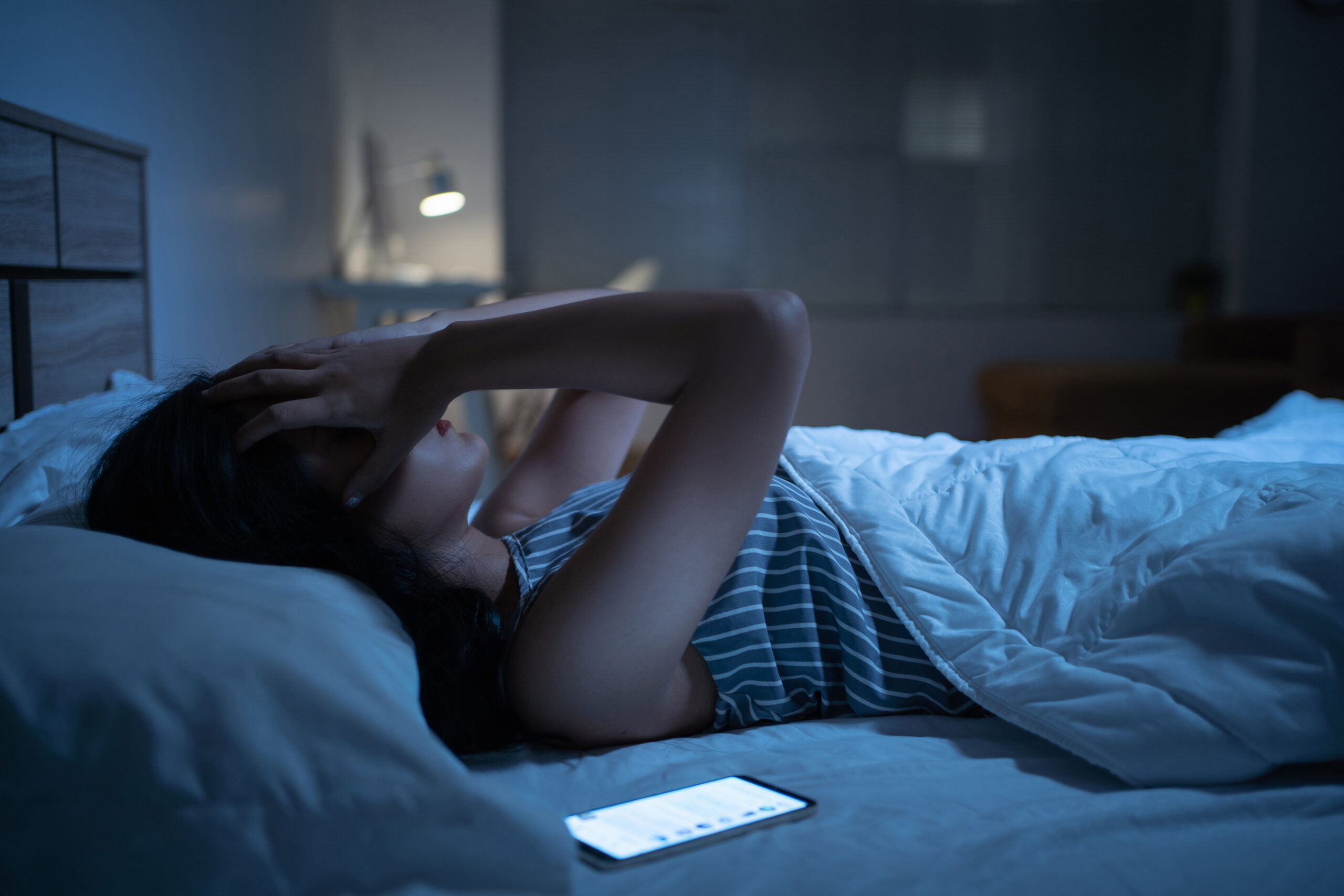

Health anxiety is persistent preoccupation with having or developing a serious illness, out of proportion to any actual medical finding. Since 2013 it has been split into illness anxiety disorder, where physical symptoms are absent or mild, and somatic symptom disorder, where real symptoms drive disproportionate distress. Reassurance and repeated testing relieve it briefly and reliably make it worse.
The scans come back clear. The bloods are normal. The doctor is confident. The relief lasts somewhere between a few hours and a few days, and then the question returns with a new symptom attached.
This guide covers what health anxiety actually is, why reassurance fails, seven signs, the two opposite behavioral patterns it produces, and what treatment involves.
What health anxiety actually is
The older word was hypochondria, and it should be retired. It carries an accusation of making things up, which is both wrong and one of the main reasons people avoid raising this with a doctor.
Current diagnostic manuals divide the territory in two. Illness anxiety disorder describes preoccupation with becoming or being seriously ill where physical symptoms are minimal or absent. Somatic symptom disorder describes genuine physical symptoms, which may have a clear medical cause, accompanied by disproportionate thoughts and behavior about them.
That second category matters more than it gets credit for. Having a real diagnosis does not exclude health anxiety. Someone with a well controlled condition can still spend four hours a day monitoring it, and the monitoring is the problem rather than the illness.
Anxiety disorders as a group are the most common mental health conditions in the United States, and the National Institute of Mental Health describes them as involving anxiety that does not go away and tends to worsen over time without treatment. Health anxiety follows that pattern closely.
The sensations are real. This is not imagination. Anxiety produces a fast heart rate, chest tightness, breathlessness, dizziness, muscle tension and gut disturbance, and every one of those is a symptom that can plausibly be read as something serious.
Why reassurance makes health anxiety worse
This is the part that surprises people, because reassurance is what everyone offers and what the person is asking for.
A clear test result reduces anxiety sharply and briefly. What the brain records is not that you are healthy. It records that checking is how safety gets established, which raises the value of checking and lowers your tolerance for uncertainty between checks.
The interval then shortens. Where a normal result once held for months, it holds for weeks, then days. Meanwhile the doubt finds the gap in every reassurance. The test was for one thing and this might be another. The result was three weeks ago and things change.
Investigation carries its own risk too. Enough tests will eventually produce an incidental finding of no clinical importance, and that finding becomes a permanent new focus.
None of this means you should ignore symptoms or avoid doctors. It means that beyond a reasonable medical workup, more testing stops being medicine and starts being a compulsion.
Seven signs of health anxiety
- Ordinary bodily sensations get interpreted as serious. A twitch, a bruise, a headache, a change in a mole
- You check your body repeatedly. Pulse, lumps, skin, tongue, breathing, sometimes many times an hour
- Symptom searching online escalates rather than settles, and ends somewhere much worse than it started
- Reassurance from doctors or family works for hours or days and then stops working
- A news story or an illness in someone you know sets off a period of intense preoccupation
- You have specific fears attached to specific diseases, and the list has changed over the years
- The preoccupation has lasted six months or more, even though the feared illness keeps changing
Duration is the diagnostic marker most people can apply themselves. Worrying intensely for three weeks after a scare is a normal human response. Six months of continuous preoccupation is a different thing.
What keeps health anxiety going
Several factors reliably show up in the history, and knowing them helps make sense of why this arrived rather than something else.
Serious illness or death in the family, particularly during childhood, is the most common. So is having been genuinely ill yourself, or having had a symptom dismissed and later found to matter, which teaches a lasting lesson about vigilance.
Working in healthcare raises exposure to worst case outcomes without raising the actual risk, and clinicians are well represented among people who develop this.
Underneath most of it sits low tolerance for uncertainty, which is a trait rather than an event and one that also shows up in generalized anxiety and in OCD. That shared root is why treatment approaches overlap across all three.
What maintains it is more useful to know than what started it. Checking, searching, reassurance seeking and avoidance are the four behaviors doing the maintenance work, and all four are modifiable.
Checkers and avoiders
Health anxiety produces two opposite behavioral patterns, and only one of them is recognized.
Checkers seek. They book appointments, request tests, examine themselves, search symptoms and ask for reassurance. This is the version everyone pictures, and it is the version doctors see.
Avoiders do the opposite. They will not go to a doctor, skip screening they are entitled to, refuse to look at a mole, and change the subject when illness comes up. The logic is that not knowing is safer than knowing, and the anxiety underneath is identical.
Avoidance is more dangerous and much less likely to be identified as health anxiety, because a person who never attends never gets assessed. Someone who has not seen a doctor in fifteen years because of fear is not casual about their health. They are frightened of it.
Plenty of people alternate between the two, checking obsessively for a period and then avoiding everything medical for months.
What health anxiety is not
Taking your health seriously is not this. Attending screening, acting on a new symptom, and managing a condition properly are all appropriate. The distinction is proportion, duration and whether the behavior reduces distress or feeds it.
Having a real illness does not exclude health anxiety either, and people with chronic conditions are at higher risk of developing it rather than lower.
The overlap with OCD is the one that causes most confusion. The rough distinction is direction of travel. Contamination OCD is preoccupied with becoming contaminated and works to prevent it. Health anxiety is preoccupied with already being ill and works to find out. The mechanisms are close enough that treatment overlaps considerably, and a fair number of people have both.
Panic disorder is worth separating too. Panic attacks involve an acute fear of dying or losing control during the attack itself. Health anxiety persists between episodes and attaches to a specific disease rather than to the sensation.
Why searching online makes it worse
Symptom searching deserves its own section because it is now the most common single driver of health anxiety and the hardest habit to shift.
The mechanics work against you. Search engines surface the most severe explanations rather than the most likely ones, because severity generates engagement. Any common symptom has a rare and serious cause somewhere in the results, and an anxious reader will find it.
Base rates get lost entirely. A symptom with a ninety nine percent benign explanation and a one percent serious one reads, on a screen at midnight, as a coin toss.
The search itself also functions as a compulsion. It relieves anxiety for a moment, which reinforces it, and the relief is what makes it so hard to stop even when you know it is unhelpful.
Treatment does not require you to accept that a symptom is harmless. It requires the ability to leave the question open, which is a different skill and a learnable one.
One more pattern worth naming. Many people with health anxiety are highly informed about medicine, having read extensively about the conditions they fear. That knowledge feels protective and generally is not, because the reading is driven by the anxiety and selects for what confirms it. Being well read on a disease is not the same as being able to assess your own risk of it, and clinicians are as vulnerable to that gap as anyone.
The cost people underestimate
Health anxiety is treated lightly in conversation and rarely by the people who have it.
The time is substantial. Hours a day across checking, searching, appointments and thinking about it, sustained over years rather than weeks.
Relationships wear down. Partners are asked the same question repeatedly, answer honestly, watch it fail, and eventually respond with irritation, which the person reads as being dismissed. Both sides are behaving reasonably and both end up worse off.
There is a medical cost too. Repeated presentations can lead to a person being taken less seriously over time, which is precisely the outcome they most fear and a real risk when something genuine does appear.
And there is the ordinary loss of years spent braced for news that has not come.
How health anxiety is treated
The evidence base here is stronger than most people expect, and outcomes are good.
Cognitive behavioral therapy adapted for health anxiety is first line. The work targets the interpretation of bodily sensation, then systematically reduces checking, reassurance seeking and searching, which is where the actual change happens. Approaches drawn from exposure and response prevention are frequently used, since the behavioral pattern is close to OCD.
Medication is a reasonable option where symptoms are moderate or severe, or where therapy alone has stalled. Antidepressants in the SSRI class have the best evidence, and where health anxiety sits alongside depression or another anxiety disorder they treat both. Which agent fits you depends on your history and is an appointment conversation.
Combining the two is usually more effective than either alone for moderate to severe presentations, and medication frequently makes the therapy tolerable enough to complete.
Bright Horizons Psychiatry provides psychiatric evaluation and medication management and coordinates with therapists trained in this work rather than delivering therapy in house.
Working with your doctor while you treat it
The practical question people ask is what to do about their physician while health anxiety is being treated, and the answer is not to stop going.
What works better than either extreme is an agreed arrangement. Scheduled appointments at a set interval rather than appointments triggered by symptoms. A clear agreement about which new symptoms genuinely warrant contact. A single clinician rather than a rotating cast, since fresh doctors order fresh tests.
Telling your physician you are being treated for health anxiety helps more than most people believe. It changes the framing from a patient who might be missing something to a patient with a known condition and a plan, and it usually improves how seriously you are taken rather than the reverse.
New and genuinely different symptoms still get assessed. Treatment does not ask you to gamble on that.
What to bring to a first appointment
- Roughly how long the preoccupation has been continuous, since six months is the threshold that separates this from a normal scare
- How much time a day goes to checking, searching, and thinking about it
- Which investigations you have already had and what they showed
- Whether you are mainly checking, mainly avoiding, or alternating between the two
- Any previous psychiatric medication, with the highest dose reached and how long you took it
- What previous therapy actually consisted of, since general counselling and structured cognitive behavioral work are not the same
The instinct is to present this apologetically, or to lead with the physical symptoms rather than the worry. Saying plainly that you think health anxiety may be the problem gets you to a useful conversation considerably faster.
Health anxiety treatment in Rockville, Maryland
Bright Horizons Psychiatry treats adults with health anxiety at our Rockville clinic at 6000 Executive Blvd, Suite 101, serving Montgomery County and the wider Washington region. Our Frederick location offers esketamine, medication management and telehealth follow ups for treatment resistant depression and ADHD.
We are an adult practice. Initial evaluations happen in person, and ongoing medication management can then run by telehealth anywhere in Maryland.
No referral is required. We accept Medicare, Maryland Medicaid and most commercial plans. You can read more on our anxiety treatment page, and our psychiatric evaluation page explains what a first appointment involves.
If you are in crisis, call or text 988 or go to your nearest emergency department. If you are physically well and losing hours every day to the fear that you are not, that is treatable and worth treating.
Questions people ask most
Is health anxiety the same as hypochondria?
It covers the same territory under a better name. Hypochondria implied the symptoms were invented, which is inaccurate and unhelpful. Current manuals use illness anxiety disorder where physical symptoms are minimal, and somatic symptom disorder where real symptoms are accompanied by disproportionate distress.
Can I have health anxiety if I have a real illness?
Yes. Having a genuine diagnosis raises the risk rather than lowering it. Somatic symptom disorder specifically describes disproportionate preoccupation with symptoms that may have a clear medical cause. The illness being real does not make the monitoring proportionate.
Why does a normal test result stop helping so quickly?
Because the relief teaches the brain that checking is how safety gets established. That raises the value of checking and lowers tolerance for uncertainty in between, so the interval between needing reassurance shortens over time. It is the same mechanism that maintains a compulsion.
Should I stop searching symptoms online?
Reducing it is one of the most effective single changes, but stopping abruptly by willpower rarely holds. It works better as a planned reduction agreed with a therapist, because searching functions as a compulsion and removing a compulsion without support tends to spike anxiety before it settles.
How long does treatment take?
Cognitive behavioral therapy adapted for health anxiety often produces meaningful change within twelve to twenty sessions. Where medication is used, antidepressants generally need four to eight weeks at an adequate dose before their effect can be judged.
What if I actually do have something serious?
Treatment does not ask you to gamble on that. Appropriate medical assessment continues, and new or genuinely different symptoms still get investigated. What changes is repeat testing for questions that have already been answered, which is where investigation stops being medicine.
Is avoiding doctors also health anxiety?
Frequently, yes. Avoidance is the other half of the same condition and it is more dangerous, because missed screening carries real risk. Someone who has not attended in years out of fear is not indifferent to their health. It is rarely identified, since people who avoid doctors are not in front of one.
Is treatment covered by insurance in Maryland?
Psychiatric evaluation and ongoing medication management are covered under Medicare, Maryland Medicaid and most commercial plans. Our team verifies benefits before anything is scheduled.