
OCD treatment for adults in Rockville and Frederick
Evidence-based OCD care for adults across Montgomery County — medication management, FDA-cleared Deep TMS, and coordinated ERP referrals, delivered by clinicians who take obsessive-compulsive presentations seriously.
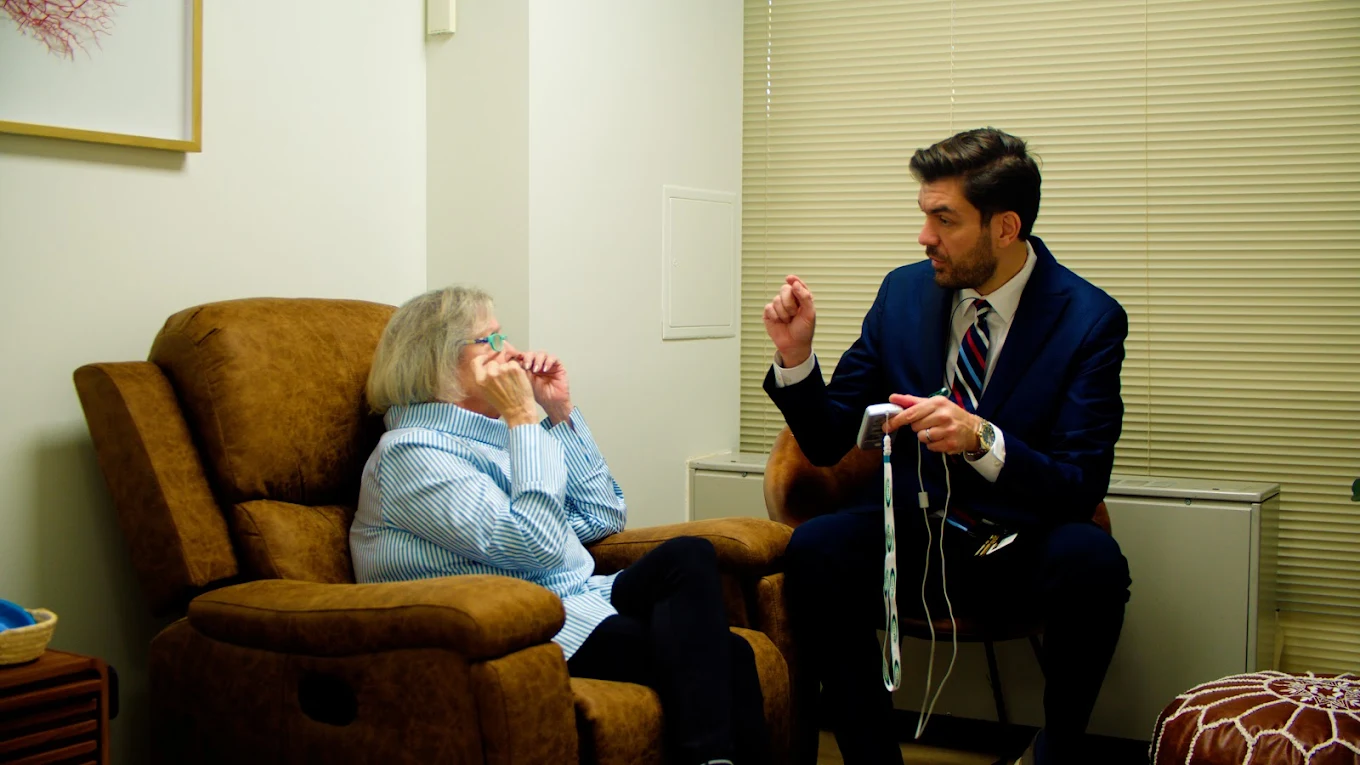
- Psychiatric evaluation for OCD
- SSRI and clomipramine expertise
- FDA-cleared Deep TMS for OCD
- Follow-ups available by telehealth
How OCD shows up
OCD is one of the most treatable conditions in psychiatry when the right approach is matched to the presentation. It is not “being neat,” and it is not just worry — it is obsessions and compulsions that steal time and mental space.
-
Contamination and checking
- Fear of germs, illness, or chemical contamination that drives washing or avoidance
- Repeated checking of locks, appliances, or messages despite knowing it is done
- Hours lost to rituals that briefly reduce anxiety, then return stronger
- Avoiding places, objects, or people that feel “unsafe” or contaminated
-
Intrusive thoughts and Pure O
- Unwanted violent, sexual, or blasphemous thoughts that feel alien and alarming
- Mental reviewing, neutralizing, or seeking certainty instead of visible rituals
- Fear that having a thought means something terrible about who you are
- Exhaustion from trying to argue with or suppress the thoughts
-
Order, symmetry, and harm
- Need for things to feel “just right,” even when the rule makes no sense
- Counting, arranging, or repeating until the feeling of incompleteness lifts
- Fear of causing harm by accident, and rituals meant to prevent it
- Relationship OCD — constant doubt about partners, feelings, or commitment
What the process looks like
OCD treatment is rarely a one-and-done intervention. We take the time to get the diagnosis and subtype right, then stay with you through medication adjustments, Deep TMS courses, flare-ups, and maintenance.
-
Book appointment
Book online or by phone. Intake paperwork is sent ahead of time so your first appointment is clinical work, not forms.
-
Comprehensive evaluation
A 60 to 90 minute in-person appointment at Rockville or Frederick covering OCD history, subtype presentation, previous treatments, co-occurring conditions, and goals.
-
Clear options, clear plan
We walk through medication options, Deep TMS when appropriate, ERP referrals, timelines, and trade-offs. You are a participant in the decision, not a passenger.
-
Follow-up and ongoing care
Early visits are typically every two to four weeks, then less often as stability settles. Established patients can do many medication follow-ups by telehealth in Maryland.
Treatment options
Effective OCD care usually rests on two pillars: medication and ERP therapy, sometimes with Deep TMS when first-line options have not been enough. We provide medication and neuromodulation in-house and coordinate ERP externally.
-
Medication management
SSRIs (and clomipramine when needed) at OCD-appropriate doses — often higher than depression dosing — started carefully and monitored through the full eight-to-twelve-week trial.
-
Deep TMS for OCD
FDA-cleared since 2018 for adults who have not responded adequately to medication. Non-invasive, about 20 minutes per session, performed in our office.
-
Coordinated ERP referrals
We do not offer exposure and response prevention in-house. We coordinate with trusted Montgomery County ERP specialists whose practice is built around OCD therapy.
-
Care for co-occurring conditions
When OCD sits next to depression, anxiety, or ADHD, we treat the whole picture — including careful sequencing when stimulants are part of the plan.
We see patients at our Rockville office and our Frederick office. OCD care is available at both offices; Deep TMS for OCD is in Rockville only.
Conditions that commonly occur with OCD
OCD rarely shows up alone in adults. We look for what else is in the picture so treatment does not miss half the problem.
-
Depression
Living inside OCD often breeds depression. Treating only one half often leaves the other half running the show.
-
Anxiety
Worry and OCD can look alike until you map obsessions and compulsions. The treatment approach changes once OCD is clearly identified.
-
ADHD
Stimulants can sometimes intensify OCD. Patients with both need careful sequencing — stabilize OCD before pushing ADHD medication hard.
-
Sleep and stress
Fatigue and isolation feed spirals. Sleep, meals, and movement often matter as much as the next medication adjustment between visits.
What makes OCD care different here
We would rather give you the full picture than a sales pitch — benefits, limitations, and a plan that fits how you actually live.
-
Built for complex OCD
We see adults whose OCD has been missed, mistreated, or only partially treated — and we build a plan that fits the subtype, not a generic anxiety script.
-
Medication plus Deep TMS
SSRIs at OCD doses, clomipramine when appropriate, and FDA-cleared Deep TMS when medication alone has not been enough — all in one practice.
-
Honest about ERP
We do not pretend to offer gold-standard ERP in-house. We coordinate with specialists who live in that work, and we stay aligned on the medical side.
-
Outpatient, with clear limits
Most adults with OCD do well outpatient. When residential care is needed, we refer to programs such as McLean, Rogers, or Menninger rather than stretching beyond our lane.
What untreated or mistreated OCD often pulls in
Leaving OCD untreated does not only leave obsessions in place. Partial or mismatched treatment can cost years — and invite other problems into the mix.
- Rituals and mental reviewing that quietly take hours out of every day
- Avoidance that shrinks work, travel, relationships, and places you used to go
- Depression that grows from exhaustion, shame, and the feeling of being trapped
- Years spent on the wrong medication class or under-dosed SSRIs that never got a fair trial
- Stimulants or cannabis tried as self-treatment that make intrusive thoughts louder
- Waiting when OCD is one of the most treatable conditions once the plan fits
Insurance and OCD visits
Psychiatric evaluation and medication management for OCD are billed as standard outpatient psychiatry under the plans we accept, including Medicare, Maryland Medicaid, and major commercial carriers. Your responsibility is whatever your plan sets for a specialist visit.
Most major plans and Medicare now cover Deep TMS for OCD when criteria are met — typically at least one failed SSRI trial. We verify benefits and handle prior authorization before the first session.
OCD questions we get asked
Does Bright Horizons treat OCD?
Yes. OCD is one of our clinical focus areas. We provide psychiatric evaluation, medication management, and Deep TMS for adults with OCD, and we coordinate with external ERP specialists for therapy.
What is the best treatment for OCD?
The gold-standard evidence-based approach is a combination of ERP therapy and SSRI medication. For patients who have not responded adequately, Deep TMS is FDA-cleared as a next step.
How long does it take for OCD medication to work?
Eight to twelve weeks to reach full effect — longer than typical depression trials. Many patients see partial improvement earlier, but medication trials should generally not be stopped before the full duration.
Does Adderall help with OCD?
No, and stimulants can sometimes worsen OCD. Patients with both ADHD and OCD need careful treatment sequencing so OCD is stabilized before stimulants are pushed hard.
Does Wellbutrin help with OCD?
Wellbutrin is not an effective OCD monotherapy. It is sometimes used as an adjunct when depression or fatigue co-occurs with an SSRI.
Does cannabis help with OCD?
There is no reliable clinical evidence that cannabis treats OCD, and for many patients it worsens anxiety and intrusive thoughts. We do not recommend self-medicating with it.
Does insurance cover Deep TMS for OCD?
Most major insurance plans and Medicare cover Deep TMS for OCD when medical criteria are met, typically at least one failed SSRI trial. We verify coverage before treatment.
What is the success rate of TMS for OCD?
Clinical studies of Deep TMS for OCD have shown response rates in the 38 to 45 percent range in patients who had not responded to prior medication — meaningful numbers in a hard-to-treat population.
Does Bright Horizons offer ERP therapy?
Not in-house. We coordinate with trusted ERP specialists in the Montgomery County area and work closely alongside them during your care.
Can my first OCD appointment be virtual?
No. Initial evaluations happen in person at Rockville or Frederick. Once you are an established patient, many medication follow-ups can be by video anywhere in Maryland. Deep TMS sessions are always in person.
What about inpatient OCD treatment?
We are an outpatient practice and do not offer inpatient care. For severe OCD requiring residential treatment, we refer to specialty programs such as McLean’s OCD Institute, Rogers Behavioral Health, or Menninger Clinic.
How quickly can I be seen?
We typically schedule new patient evaluations within one to two weeks, with faster access for urgent presentations.