

Pure O OCD describes obsessive compulsive disorder where the compulsions are mental rather than visible. The name is misleading, because compulsions are present in almost every case. They take the form of rumination, mental reviewing, silent reassurance and checking internally for a reaction. It is treated exactly as any other OCD is, with exposure and response prevention and medication at OCD level doses.
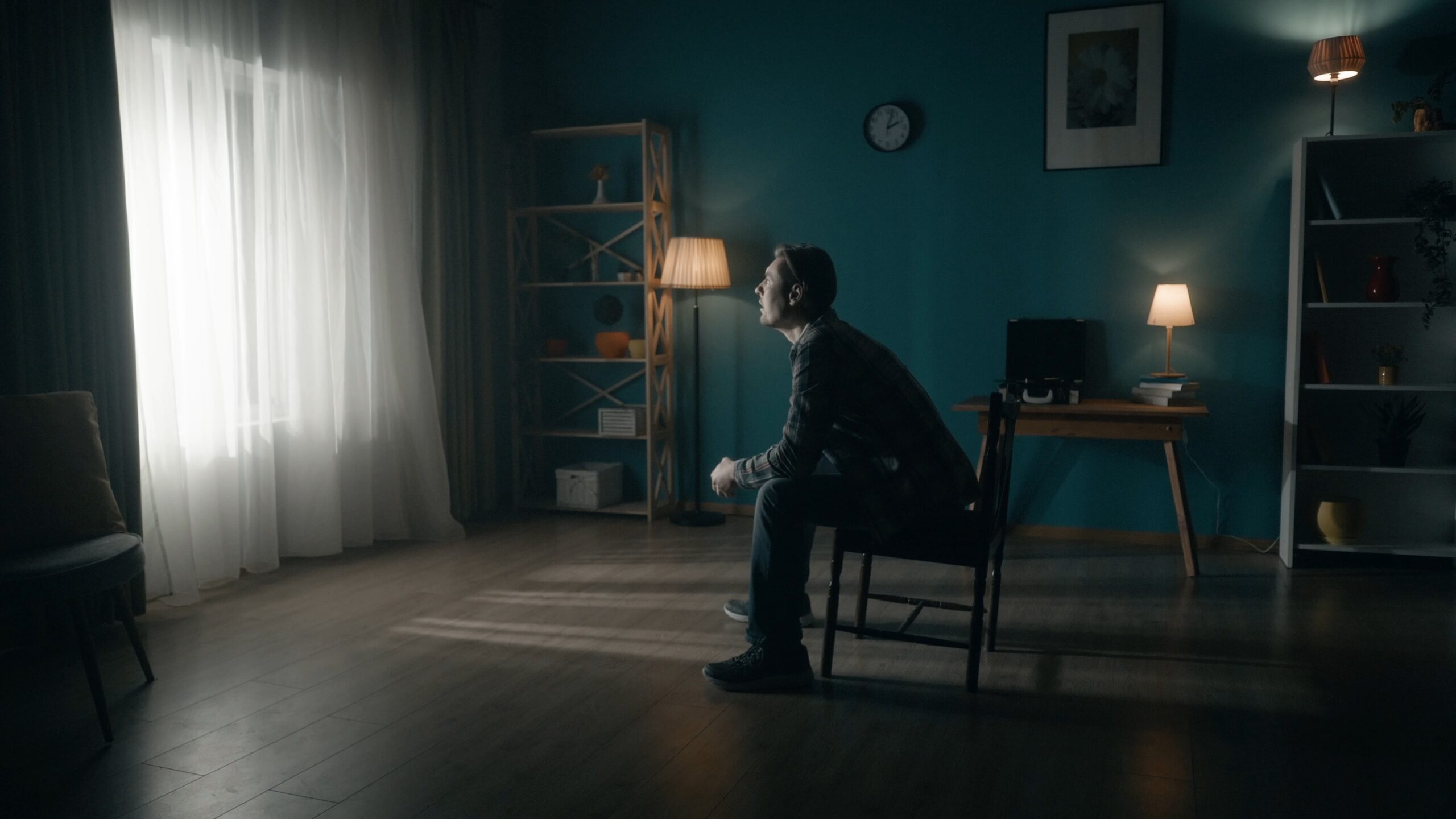
From outside, nothing happens. No washing, no counting, no checking the lock. The person looks like they are sitting quietly, and they are conducting an argument with themselves that has been running for eleven hours.
This guide covers why the label is wrong, the mental compulsions almost nobody identifies as compulsions, why reading about it does not help, and what treatment involves.
Why Pure O OCD is a misnomer
The term came from patients and clinicians describing OCD that appeared to have obsessions and no compulsions. Careful assessment has since shown that the compulsions are almost always there. They are simply happening inside the head.
This matters practically rather than pedantically. If you believe you have no compulsions, treatment looks impossible, because response prevention is the half of therapy that does the work. Identifying the mental compulsion is what makes the condition treatable.
The National Institute of Mental Health describes OCD as recurring unwanted thoughts alongside repetitive behaviors a person feels driven to perform. In Pure O OCD the repetitive behavior is cognitive, and it is every bit as compulsive as a physical one.
You will still hear the term used, including by clinicians, and there is no harm in using it to find help. Just do not take it literally.
The mental compulsions in Pure O OCD that nobody recognizes
These are the behaviors doing the maintenance work in Pure O OCD, and most people arrive at treatment having never considered any of them a compulsion.
Rumination is the largest compulsion in Pure O OCD. Turning a question over, trying to reason it to a conclusion, building arguments for and against. It feels like problem solving, which is exactly why it survives so long unchallenged. It is not problem solving. It is a compulsion with better public relations.
Mental reviewing is close behind. Replaying an event to check what you did, what you said, how you felt at the time, searching memory for evidence that settles the question.
Checking internally is subtler. Deliberately calling up a thought or an image to see whether it produces a reaction, then examining the reaction. This one is particularly insidious because the act of checking generates anxiety, which then reads as the answer.
Then there is silent reassurance, where you tell yourself the counterargument you already know. Mental neutralizing, replacing a bad thought with a good one or a phrase. Avoidance of triggers, people, films and conversations. And reassurance seeking from others, which looks like ordinary conversation and functions as a compulsion.
Seven signs of Pure O OCD
- Intrusive thoughts arrive unbidden and are the opposite of what you value, which is what makes them so distressing
- Hours disappear into thinking about a question that never resolves, and the day ends with nothing settled
- You need certainty rather than probability. Almost certainly not is intolerable where most people would accept it
- You test yourself, deliberately provoking the thought to see how you react
- You seek reassurance repeatedly, from people, from searching, from your own memory, and relief lasts minutes
- You avoid situations, people or media connected to the theme, and the avoided list keeps growing
- Shame prevents you saying any of it aloud, including to clinicians, sometimes for years
The distress itself is diagnostic in Pure O OCD. Intrusive thoughts in OCD are unwanted and run against the person’s values, which is precisely why they cause so much suffering. Somebody who found the thoughts acceptable would not be reading this.
The themes Pure O OCD attaches to
Pure O OCD attaches itself to whatever a person would find most unbearable to be. The content varies enormously and the mechanism does not.
Common themes include unwanted intrusive thoughts about causing harm, unwanted intrusive thoughts of a sexual nature, doubts about relationships, doubts about sexual orientation, religious and moral scrupulosity, and existential or philosophical questions that cannot be answered.
Two things are worth saying plainly about these. The theme is not a clue about the person. OCD selects for what would be most distressing, which means the content is close to the opposite of who someone is. And the specific theme does not change the treatment, which is identical across all of them.
Shame around certain themes keeps people silent for years, and it is the single biggest cause of delay. Clinicians who treat OCD regularly have heard all of it and will not be shocked. Naming the theme accurately at an evaluation shortens the route to help considerably.
Why this article cannot reassure you
If you are reading this looking for the sentence that settles it, that search is itself the compulsion, and it is worth saying so directly rather than obliging.
Reassurance works briefly and reliably makes Pure O OCD worse. Each round teaches the brain that certainty is obtainable and necessary, which raises the demand for it. That is true whether the reassurance comes from a partner, a forum, a search result or an article written by a psychiatry practice.
An article also cannot diagnose you. Nothing written here can tell you which category your experience falls into, and any page that claims to is selling certainty it does not have.
What treatment offers instead is the ability to hold the question open without answering it. That sounds like a worse deal than certainty and it is the only one that actually works.
When it is not Pure O OCD
This distinction needs stating carefully, because getting it wrong in either direction causes harm.
Intrusive thoughts in OCD are unwanted, distressing and inconsistent with what the person wants. They are accompanied by fear of the thought rather than by any wish to act on it, and by extensive effort to prevent or neutralize it.
That is a different picture from wanting to do something, planning it, or feeling drawn toward it. If what you are experiencing includes genuine urges or intent to harm yourself or anyone else, that is not something to sort out through an article or a self assessment. It needs same day in person assessment. Call or text 988, or go to your nearest emergency department.
Both statements are true at once. Most people terrified by an intrusive thought are describing OCD, and a small number of people are describing something else, and only a proper assessment distinguishes them. That is a reason to be seen rather than a reason to keep it to yourself.
What Pure O OCD costs day to day
Because nothing is visible, the cost gets underestimated by everyone including the person carrying it.
Attention is the first casualty. Rumination occupies working memory, so reading, driving, meetings and conversations all get processed at half capacity. People frequently describe this as brain fog and get investigated for something else entirely.
Sleep goes next, since the compulsion is most available when there is nothing else to occupy the mind. Bedtime becomes the worst hour of the day.
Relationships absorb a strange kind of strain. A partner is being asked the same question in slightly different forms, without understanding why an answer given yesterday no longer counts. In relationship themed Pure O OCD the partner is also the subject of the doubt, which makes the situation considerably harder to explain to them.
Depression follows often enough to be predictable. Months of unresolvable questioning, secrecy and self suspicion is a reliable route to low mood, and it is common for the depression to be treated while the Pure O OCD underneath it goes unnamed.
One practical note for the people around someone with this. Answering the question is the instinct and it is the wrong move, because each answer buys minutes and raises the price. What helps is agreeing in advance, ideally with the therapist involved, that you will not answer reassurance questions and will say so warmly rather than coldly. Done without that agreement it reads as rejection, which is why it needs to be planned rather than improvised.
Why Pure O OCD gets missed for years
Several things combine to delay a Pure O OCD diagnosis, and the delay here is longer than for most OCD presentations.
Nothing about Pure O OCD is observable. Family notice distraction and withdrawal rather than a symptom, and there is no washing or checking to point at.
The screening questions miss it. A clinician asking about repetitive behaviors gets an honest no from someone whose compulsions are entirely mental, and the answer closes the line of inquiry.
It gets labeled as something else. Generalized anxiety is the most common substitute, since worry and rumination look similar from outside. Depression is second, and often genuinely present as a consequence.
And shame does the rest. People disclose the milder themes and withhold the ones that frighten them most, which means the clinician is assessing an incomplete picture. If you have only ever told a doctor part of it, that is worth correcting at the next appointment.
How Pure O OCD is treated
Treatment for Pure O OCD is exposure and response prevention, usually shortened to ERP, with medication alongside where symptoms are moderate or severe. This is the same protocol used for every other OCD presentation, adapted to compulsions that happen internally.
General talk therapy is the wrong tool and can entrench the problem. Exploring at length why a thought arrived, or working through whether it says anything about you, is rumination conducted with professional assistance. If previous therapy consisted of analyzing the content of the thoughts, that was not ERP.
Bright Horizons Psychiatry provides psychiatric evaluation and medication management and coordinates with ERP trained therapists rather than delivering therapy in house. The International OCD Foundation maintains a directory of clinicians with specific OCD training, which is worth using, because general anxiety experience does not translate.
What ERP looks like without visible compulsions
People assume ERP cannot apply to Pure O OCD because there is no behavior to prevent. There is. It is just internal.
The first task is mapping, which usually takes several sessions. Separating obsession from compulsion when both are thoughts is genuinely difficult, and most people cannot do it alone at the start. The rough test is direction. The obsession arrives and raises anxiety. The compulsion is what you do next to lower it.
Exposure then involves deliberately approaching the thought rather than avoiding it, often in writing or recorded form, held long enough for the anxiety to fall on its own.
Response prevention means not ruminating, not reviewing, not checking your reaction, not asking anyone, and not silently arguing back. That is harder than not washing your hands, because the compulsion is always available and nobody can see you doing it.
The target is not certainty about the feared thing. It is tolerating not knowing. Patients frequently report that the thoughts still occur and no longer matter, which is the actual outcome rather than a consolation prize.
Medication and Deep TMS for Pure O OCD
Medication lowers baseline anxiety enough to make ERP possible, which for severe Pure O OCD is frequently what gets therapy off the ground at all.
The two things that catch people out are dose and duration. OCD needs higher doses than depression, and a fair trial runs ten to twelve weeks at that dose rather than six. A great deal of apparently failed treatment was never adequately tried. Our article on OCD medication covers the sequence, and our article on contamination OCD covers the more visible presentation.
Deep TMS carries FDA clearance specifically for obsessive compulsive disorder, granted in 2018, based on trial data in patients who had not responded adequately to medication. We use BrainsWay Deep TMS at our Rockville clinic. It is not offered at Frederick.
Pure O OCD treatment in Rockville, Maryland
Bright Horizons Psychiatry treats adults with Pure O OCD at our Rockville clinic at 6000 Executive Blvd, Suite 101, serving Montgomery County and the wider Washington region. OCD care is provided at Rockville. Our Frederick location offers esketamine, medication management and telehealth follow ups for treatment resistant depression and ADHD.
We are an adult practice. Initial evaluations happen in person, and ongoing medication management can then run by telehealth anywhere in Maryland.
You will not be judged for the content of your thoughts, and you will not be reported for describing them. That fear keeps a large number of people out of treatment for years and it is worth addressing directly.
No referral is required. We accept Medicare, Maryland Medicaid and most commercial plans, and our staff handles prior authorization for Deep TMS. You can read more on our OCD treatment page.
Questions people ask most
Is Pure O OCD a real diagnosis?
It is a widely used description rather than a formal diagnostic category. The formal diagnosis is obsessive compulsive disorder. The term describes presentations where compulsions are mental rather than visible, and careful assessment nearly always finds compulsions present.
Can you have OCD with no compulsions at all?
Almost never. What looks like an absence of compulsions is usually rumination, mental reviewing, internal checking or silent reassurance, none of which people tend to classify as compulsions. Identifying them is what makes treatment possible.
Do the thoughts mean anything about me?
Intrusive thoughts in OCD are unwanted and run counter to a person’s values, which is why they cause distress. The theme tends to attach to whatever someone would find most unbearable to be. An evaluation is where that gets assessed properly rather than settled by reading.
Why does thinking it through never resolve anything?
Because rumination is a compulsion rather than problem solving. Each round produces brief relief, which reinforces the behavior and raises the demand for certainty. The question is built so that no amount of thinking closes it.
Will I have to describe my thoughts out loud?
You will be asked about them, and clinicians who treat OCD regularly have heard the full range. Shame is the main reason people delay for years. You can also write them down and hand the note over if saying them is too difficult.
How long does treatment take?
ERP often produces meaningful change within twelve to twenty sessions, though mapping mental compulsions usually takes the first few. Medication needs ten to twelve weeks at a therapeutic dose before it can be judged fairly.
Is it treated differently from other kinds of OCD?
No. The protocol is the same, adapted so that response prevention targets internal behaviors rather than physical ones. That adaptation is why a therapist with specific OCD training matters more here than in more visible presentations.
Is treatment covered by insurance in Maryland?
Psychiatric evaluation and medication management are covered under Medicare, Maryland Medicaid and most commercial plans. Deep TMS for OCD is covered by some plans and not others, and our team verifies benefits and handles prior authorization first.